


AIRR Investment Committee at RVF-2026: Regional Startups Close Deals Directly as Experts Discuss Venture Market Growth and New Tech Financing Mechanisms
At the Russian Venture Forum (RVF 2026) in Kazan, the Association of Innovative Regions of Russia (AIRR) launched a large-scale initiative to reboot the regional venture capital ecosystem-ranging from high-policy discussions to the execution of live investment deals.
AIRR’s business program kicked off with an expanded meeting of the Infrastructure Committee, where federal officials, development institutions, and investors brainstormed strategies to help regional tech businesses attract capital. The session was chaired by Rifkat Minnikhanov, President of the Academy of Sciences of the Republic of Tatarstan, who emphasized that the ultimate litmus test for any startup’s viability is market demand and having a defined end-customer; without these, even well-funded initiatives are unsustainable.
The session’s moderator, AIRR Director Aleksandr Smekalin, noted that the association is currently building an end-to-end pipeline for startups-stretching from training investment analysts to guiding companies toward pre-IPO and IPO stages. Federal agencies echoed this focus on public markets. Evgeniya Sidorchuk, Head of Division at the Department of Financial Policy at the Russian Ministry of Finance, announced that the ministry is actively incentivizing companies to go public and is developing a specialized listing navigator on the RF Investment Map. In turn, Moscow Exchange representative Dmitry Sukharev confirmed this momentum, highlighting a qualitative surge in IPOs among small and medium-sized enterprises (SMEs), particularly within the tech sector.
Despite the optimism, experts maintained a pragmatic outlook, pointing to ongoing structural shifts in the market. Maria Sutormina, CEO of the "Syndicate" venture club, highlighted a contraction in early-stage investor activity. This trend threatens to create a "pipeline deficit" that could lead to a shortage of high-quality, mature projects in the future. To bridge this gap, Sutormina advocated for startup education initiatives and robust regional support mechanisms to retain talent locally. Pavel Dvornichenko, CEO of the Center for Engineering and Innovation Support, shared a powerful financial incentive aimed at solving this issue, noting that in 2026, the center is prepared to subsidize tech SME expenses up to 15 million rubles for pre-IPO listings and up to 80 million rubles for IPOs. Additionally, the center will continue its grant - based "scale-up" program tailored to align suppliers with the procurement needs of major corporations.
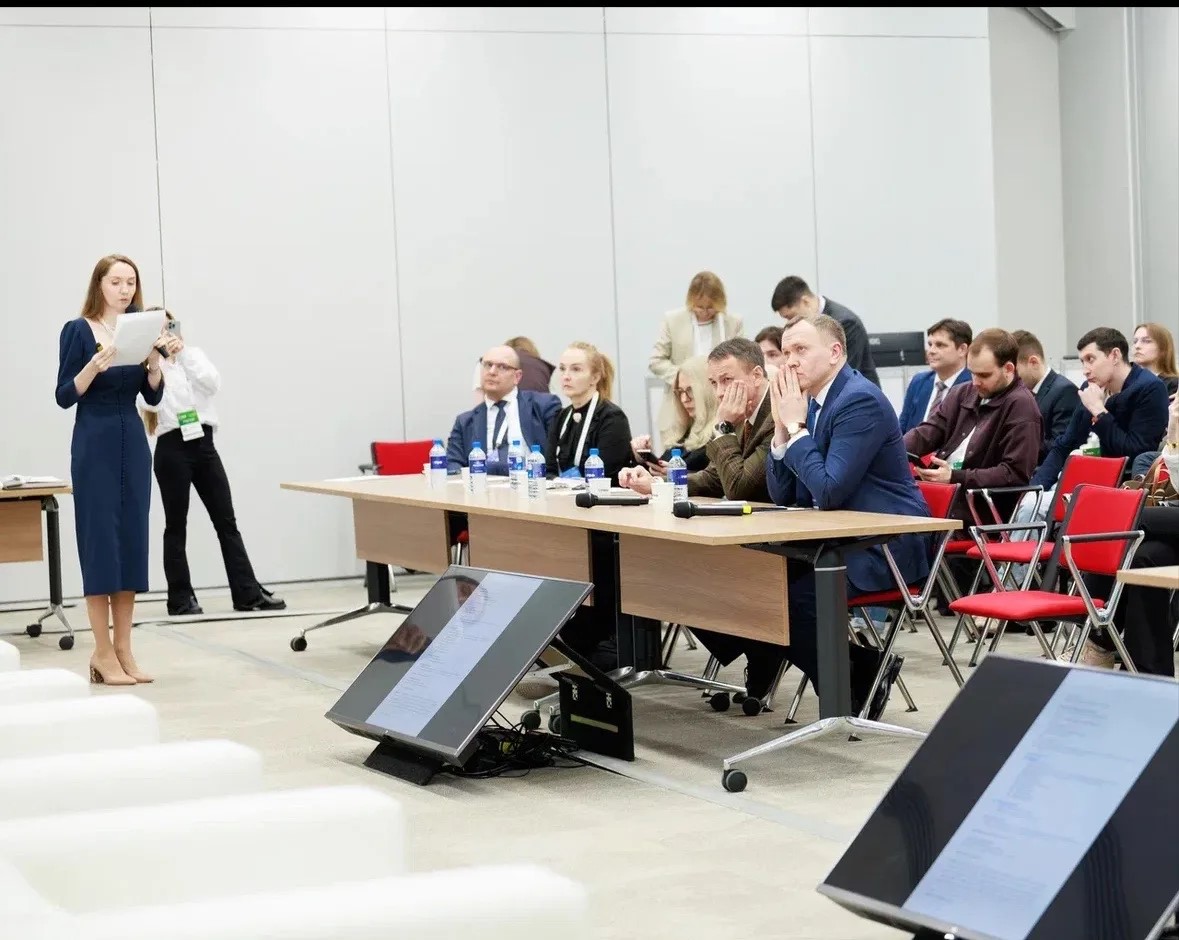
The forum’s transition from theory to practice culminated in AIRR’s inaugural in-person Investment Committee, where startups pitched their solutions directly to funds. The format proved highly successful, attracting more investors to the room than there were projects pitching. To ensure a seamless entry for regions into the venture ecosystem, AIRR deployed its new proprietary training program for investment analysts. These analysts worked closely with founders to ensure professional investment readiness before they took the stage. As Aleksandr Smekalin emphasized, these tools enable strong regional teams to secure funding without having to relocate to the capital.
A total of five regional projects were presented, spanning AI solutions in healthcare and agriculture, cybersecurity, and digital twins for infrastructure. Several startups received immediate preliminary backing from investors, while the remainder entered deep-dive due diligence. Commenting on the pitch outcomes, Maria Sutormina noted that investors are often less afraid of losing money than they are of missing out on a massive opportunity, and an analyst's job is to illuminate that growth potential. The successful debut of this live pitching format proved the high demand for such match-making events, and AIRR plans to turn these sessions into a recurring instrument for driving regional business growth.