


Russian Venture Forum Hosts Discussions on Bioeconomy Development Strategies Through 2035
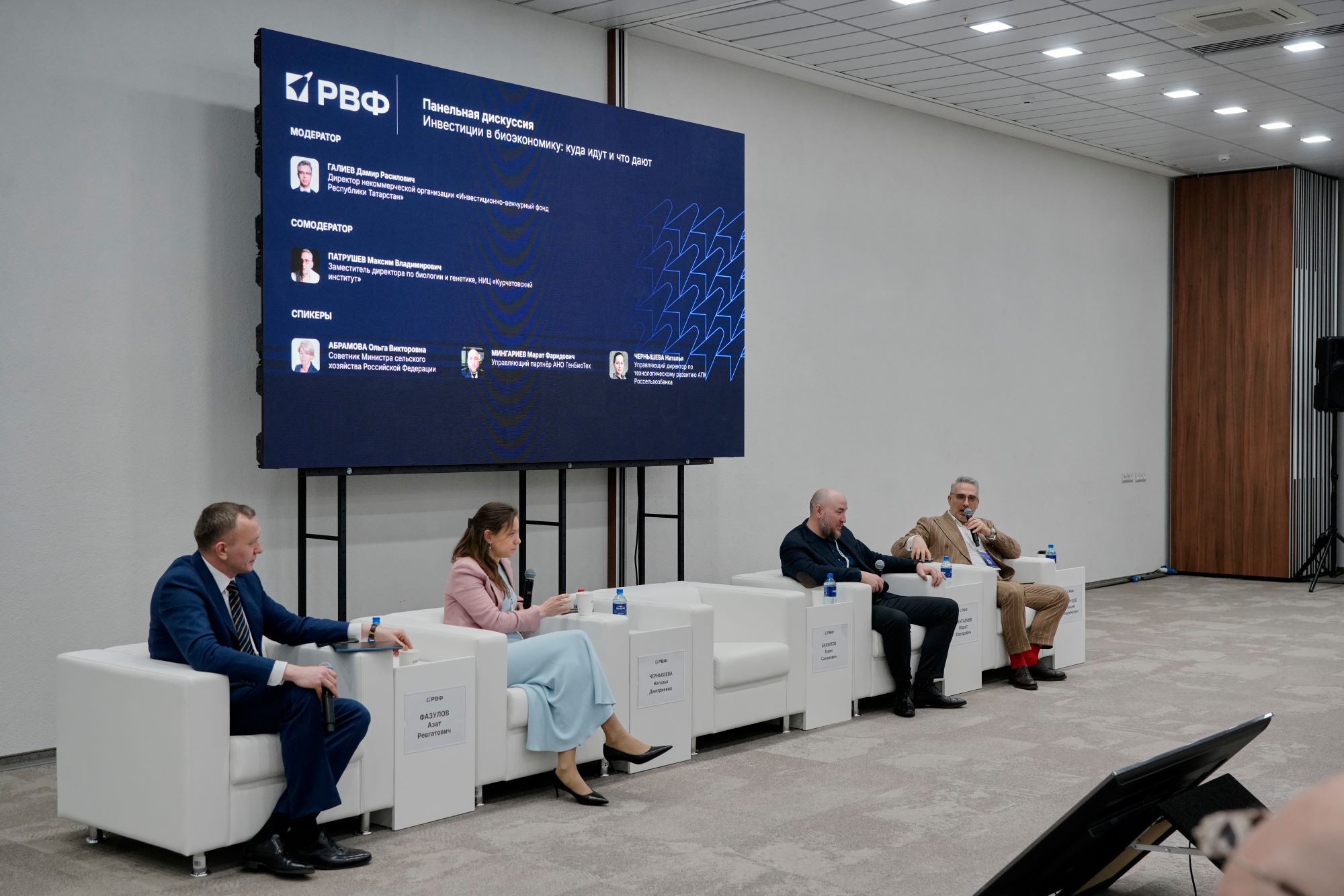
The cornerstone expert session "Investment Specifics in Russia's Bioeconomy" was held as part of the 20th Russian Venture Forum's (RVF) business program. This specialized satellite event brought together leading scientists, federal policymakers, and venture fund managers to map out the industry's strategic investment focuses through 2035.
The discussions centered on four critical pillars: debunking biotecheconomy market myths by analyzing current domestic volumes; identifying priority high yield investment channels for the 2026-2035 horizon; assessing Russia's scientific runway and its capacity to meet market demands for high-value-added products; and addressing venture capital barriers like risk return profiles, technical hurdles, and the role of state-backed de-risking mechanisms. The panel featured key sector leaders, including Maksim Patrushev (Kurchatov Institute), Dr. Mughees Shaukat (International Islamic Rating Agency), Natalya Chernysheva (Rosselkhozbank), Gelyus Bayazitov (Tatarstan Ministry of Agriculture), Azat Fazulov (Investment and Venture Fund of the Republic of Tatarstan - IVF RT), and Marat Mingariev (GenBioTech).
Experts underscored that the bioeconomy is now a primary driver for national technological sovereignty and food security over the next decade. Maksim Patrushev stressed the urgency of technology readiness levels (TRL), stating that the focus must shift from laboratory research to industrial scaling to build real economic value. From a financing perspective, IVF RT First Deputy Director Azat Fazulov highlighted the necessity of extended investment horizons through 2035, noting that clear regulatory frameworks and public-private co-investment structures are vital to mitigating early stage risk. He emphasized that Tatarstan is actively bridging its strong academic foundation with venture capital to commercialize proprietary biotech molecules and platforms.
Dr. Mughees Shaukat introduced a global capital perspective, linking biodiversity preservation to the expansion of the Halal ecosystem. He noted that strategic foreign direct investment (FDI) from GCC and OIC nations into Tatarstan could rapidly accelerate sustainable agriculture and Halal logistics, ultimately positioning Kazan as a secure, regional Halal food and tourism hub.
The session concluded with the classification of five high - priority development verticals:
● Genomic Selection: Focused on livestock, poultry, equine breeding, and aquaculture.
● Reproductive and Bioengineering Technologies: Scaling advanced cellular and genetic modifications.
● Digital Phenotyping and AI: Integrating machine learning into biological data analysis.
● Core Infrastructure: Expanding specialized laboratories, LIMS (Laboratory Information Management Systems), and secure data hubs.
● Sovereign Genetic Solutions: Eliminating import dependencies across primary agricultural pipelines.
To execute this vision, participants called for the creation of dedicated biotech investment vehicles and recommended establishing a comprehensive pilot project in Tatarstan to unify capital, research, and industrial off-takers before scaling the model nationwide.
The full session broadcast can be viewed here.